
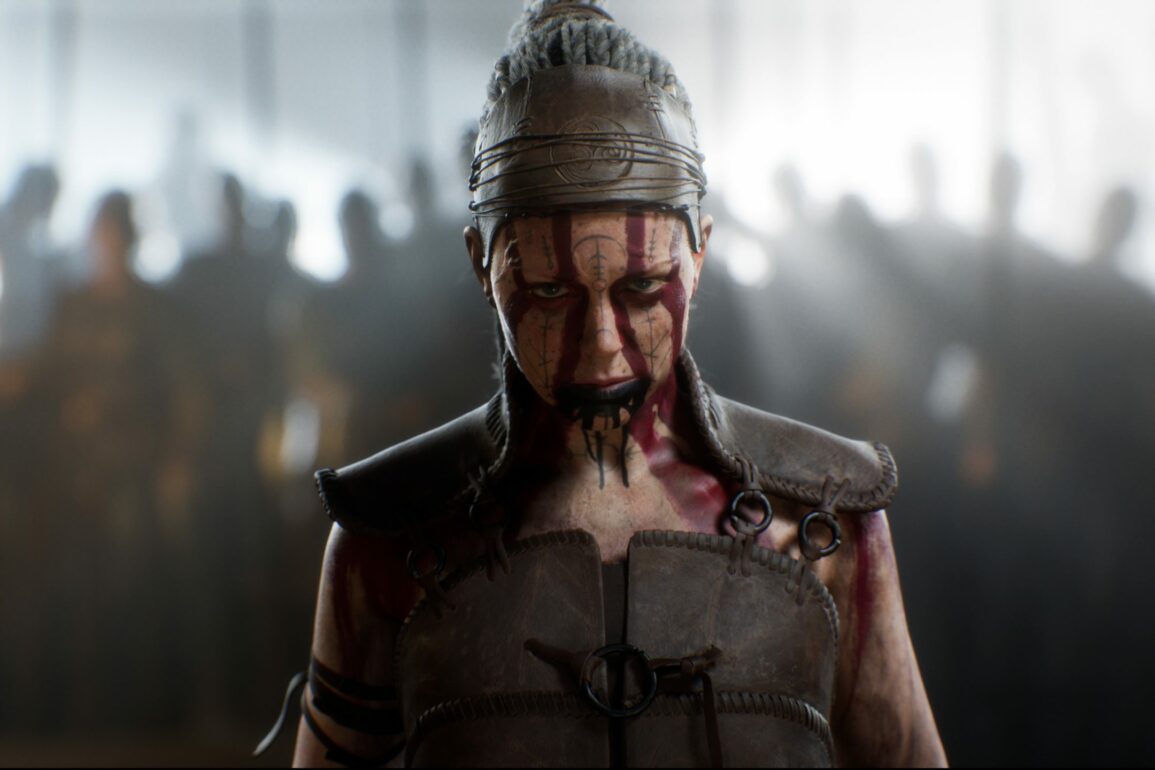
Senua’s Saga: Hellblade II is a game I have been waiting years for. Now that I have finally experienced Senua’s story once more, I can definitely say it was worth the wait. Ninja Theory has done a truly exceptional job and created what I can only describe as the perfect masterpiece. There is a lot to say about this sequel, but if you were a fan of the original or simply looking for a great narrative-driven experience, then Senua’s Saga: Hellblade II is for you.
“Senua’s Saga: Hellblade II is notably not for the faint-hearted”
Senua’s Saga: Hellblade II is a sequel to the critically acclaimed Hellblade: Senua’s Sacrifice. It continues Senua’s journey after the original game, where she finds herself in a dire predicament after the boat she is on crashes. In an unknown land, Senua finds many enemies and, surprisingly, allies who guide her, helping her to continue pushing toward her new promised quest.
Senua’s Saga: Hellblade II is notably not for the faint-hearted. It features intensely realistic, gruesome situations, combat, visuals, and sounds. This includes the intricate and realistic depictions of Senua’s psychosis. However, this is one of the best parts of Senua’s Saga: Hellblade II, as it keeps you on edge as you immerse yourself in Senua’s world, especially if you play with headphones.

Senua’s Saga: Hellblade II also features many greatly appreciated accessibility options that greatly extend the number of people who can experience Senua’s story. These include subtitles and closed captions with advanced display settings, motion blur adjustments, colorblind modes, customizable UI color schemes, menu narration, and self-play for offensive and/or defensive combat actions.
“Hellblade II tells an enthralling story of vengeance that delves deep into Senua’s complex character.”
Hellblade II tells an enthralling story of vengeance that delves deep into Senua’s complex character as it explores her ability to trust, as well as her courage as both a person and a warrior. As she travels the land, uncovering its secrets, such as the mysterious Hiddenfolk and the roaming giants, she takes on a sense of duty and responsibility for this new land and its people. After all, she is the only one capable of defeating the giants. Although she continues to be haunted by her father, she perseveres and discovers what she is capable of. It helps, too, that she has finally come to terms with the voices in her mind, which helps drive her.
During Senua’s quest, she encounters three notable people: Thórgestr, Fargrímr, and Ástríðr, each playing a significant role in her quest. These characters are not only important but also extremely in-depth and detailed people, and you grow to understand them during the course of Senua’s Saga: Hellblade II. It was also quite refreshing to have other characters interact with Senua in a none violent way, as in Hellblade: Senua’s Sacrifice, she basically had no human interaction during her story.

“I was so immersed in the game’s story and world that I never felt like I was interacting with actors playing characters.”
The best way to experience Senua’s Saga: Hellblade II is undoubtedly with headphones. This is due to the full 3D Binaural sound, which plays a major role in the storytelling. It greatly heightens the experience of hearing and understanding Senua’s psychosis. It was definitely something I appreciated even more this time around compared to the first game. Without headphones, the experience would have been fine, but a lot would have been lost.
It also helps that the voice cast does a tremendous job across the board. Not a single moment across the relatively short experience felt under or over-performed. In fact, I was so immersed in the game’s story and world that I never felt like I was interacting with actors playing characters. It also helps that the soundtrack is an exceptional work of art. As a fan of Heilung, I found it amazing to hear their voice and music as I fought enemies. Regardless of my love for Heilung, the soundtrack was perfectly fitting and gave me a sense of urgency and beauty in every situation. The music shook me to the core and only enhanced the experience of Senua’s Saga: Hellblade II.

Naturally, the sound design is just as good, with everything from the sound of water droplets and waves to the sound of fire crackling and voices from afar so perfectly integrated and mixed that it further serves to immerse you in this breathtaking world. It is clear that a lot of passion was put into the ambient audio alone, and it perfectly added to the atmosphere created for this highly realistic game. Senua’s Saga: Hellblade II audio plays just as big of a role as its visuals, and I was extremely grateful to see so much love and attention given to it.
“Every time Senua takes down an enemy, a gory and glorious animation plays out that really emphasizes the action.”
In terms of gameplay, Hellblade II is split between combat, exploration, and puzzle-solving. The combat is beautifully intense, cinematic, and gruesomely visceral. Every move Senua makes feels purposeful, largely thanks to the phenomenal animations. Combat feels explosive and raw, which becomes especially evident when fighting groups of enemies, as they’ll crash into one another while attacking you. It has also been masterfully implemented, as it never feels overly burdensome, all while perfectly encapsulating the horrifying feeling of fighting for your life. It keeps you on your toes, with every encounter making you question how you’ll fight your way out of it.
Fortunately, enemy variety is plentiful, ensuring that combat never feels stale. It helps that the game’s runtime, especially if you rush, isn’t particularly long. Nevertheless, the game is constantly introducing new terrifying enemies to fight which range in difficulty. Additionally, the use of sound during combat was phenomenal. There’s nothing scarier than hearing a haunting thud from behind you.

While the animation work is great in Hellblade II, it does feel fairly reminiscent of Hellblade: Senua’s Sacrifice. Of course, they’re far cleaner and better executed, especially when it comes to her finishing moves. Every time Senua takes down an enemy, a gory and glorious animation plays out that really emphasizes the action. It’s pretty brutal but a satisfying way to get you into Senua’s mindset.
Of course, outside of combat, you’ll be solving puzzles. These serve as a nice break from the intense action, affording you moments of respite that further delve into the game’s lore and story. I found these to be generally easier than the first game’s puzzles, albeit rarely overly simplistic. You’re given everything you need to solve them, so you won’t often find yourself scratching your head, wondering what to do next.
“Senua’s Saga: Hellblade II is the perfect sequel to Hellblade: Senua’s Sacrifice.”
Overall, Senua’s Saga: Hellblade II succeeds as both a cinematic adventure and a deeply moving exploration of its protagonist, Senua. As I dove deeper into her continued story, I found myself completely engrossed. I understood the importance of her psychosis, I felt her pain, her exhaustion, her fear, and most definitely her courage as she fought in her many atmospheric and distressing fights. It is a deeply emotional experience, one backed by gorgeous visuals and a staggeringly good soundtrack that coalesces to create a truly genre-defining and groundbreaking work of art.

Senua’s Saga: Hellblade II is the perfect sequel to Hellblade: Senua’s Sacrifice. Anyone who played the first will not want to miss out on its sequel, and for those who missed it, this is still a worthwhile adventure. Senua’s Saga: Hellblade II is a perfect example of developers at the top of their game and is very much deserving of this year’s Game of the Year award.
Disclosure: Game Crater was provided a copy of ‘Senua’s Saga: Hellblade II’ from Xbox for this review.

Leave a Reply