
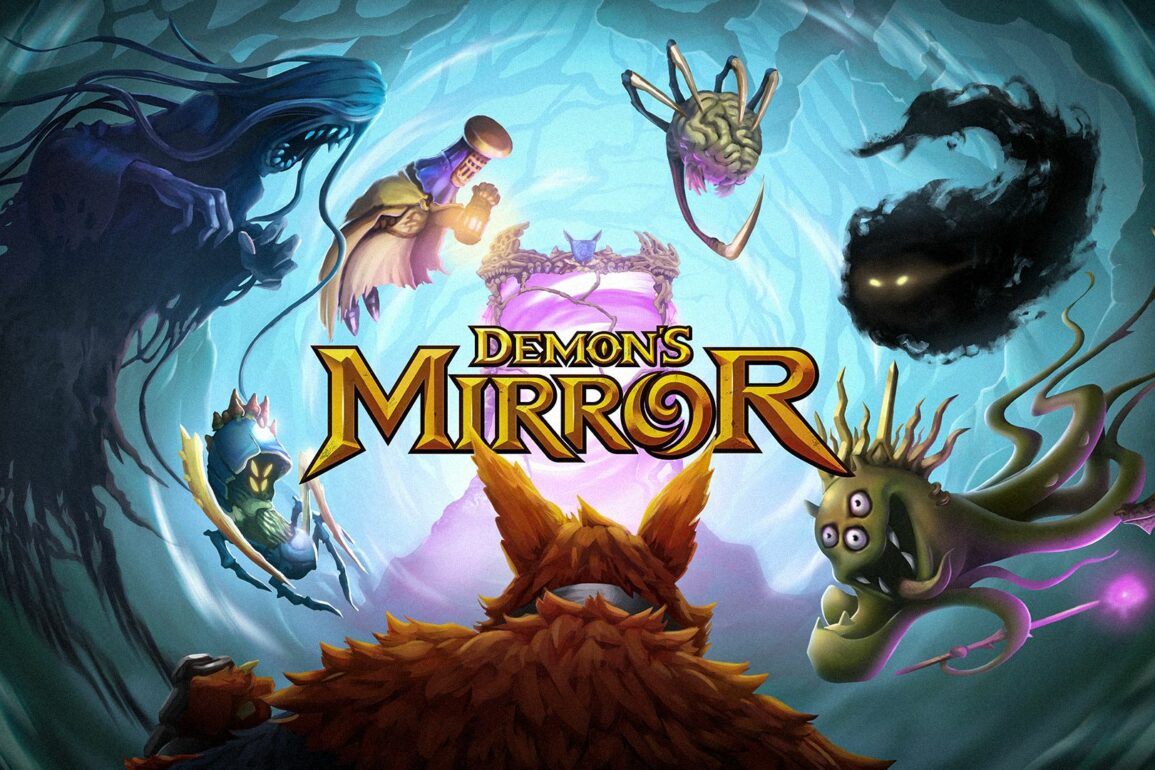
I’m a pretty big fan of roguelike deckbuilders and I’ve even dabbled in the occasional three-week obsession of tile-matching games. So, when I was presented with the opportunity to preview Demon’s Mirror, a roguelike deckbuilder with tile-matching elements, I was pretty elated. Fortunately, I’m happy to announce that my time was well spent. While Demon’s Mirror didn’t blow me away like fellow roguelike deckbuilder Zet Zillions (although, admittedly, that bar was set quite high), it did prove to be an entertaining experience, and one I suspect will be far better in the full release.
“Demon’s Mirror’s biggest strength is that it removes one of the most frustrating elements of roguelike deckbuilders: luck.”
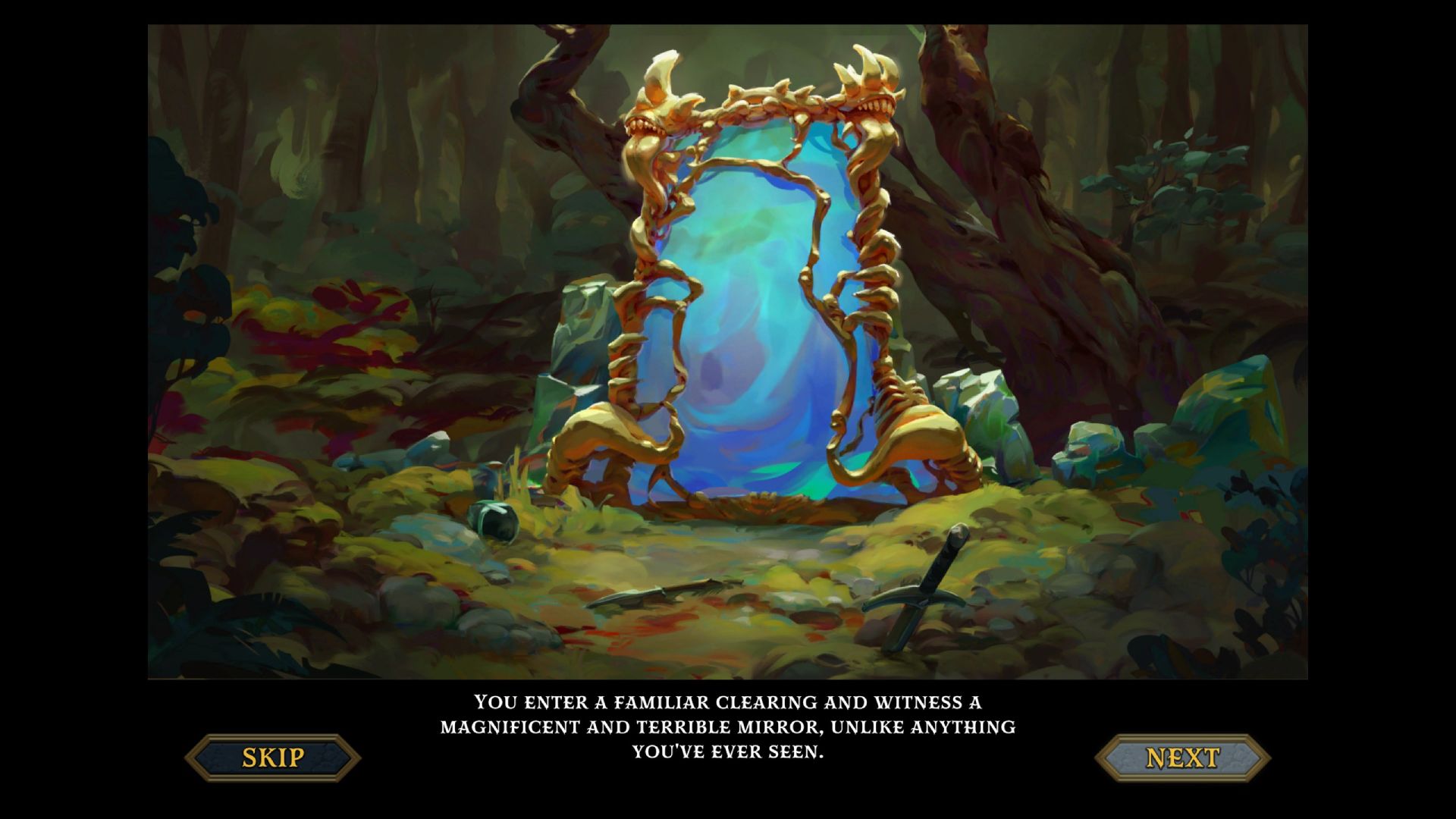
Let’s get some housekeeping out of the way first. The preview build I had access to was mostly the same content as the demo released back in March. I could play as one of the three available characters, Draga, and had access to the first world and boss fight. There are apparently some differences between this build and the demo, including quality-of-life fixes, improved UI, new cards, and, perhaps most importantly, a new story intro.
For those who didn’t play the demo back in March, Demon’s Mirror sees you take on the role of one of three characters, each with their own unique deck and trinket. You’re whisked away to a mysterious world where you must progress through an FTL-esque board filled with enemy encounters, random events, shops, and camps where you can heal or upgrade your cards. The twist here is that in battle, you have access to both your cards, which can inflict damage and buff you, as well as a tile-matching board that can do the same. This is Demon’s Mirror’s biggest strength, as it removes one of the most frustrating elements of roguelike deckbuilders: luck.

“The novel gameplay ensures that if you get a bad hand, you’ve still got a way to turn the tide of battle in your favor.”
Combat in Demon’s Mirror sees you take on one or more enemies in card-based combat. You have a deck of cards that, like all good roguelike deckbuilders, serves as your means of attack and defense. For example, I could use the card Strike to inflict 5 damage or Hold Out to increase my shields. Were this the only gameplay in Demon’s Mirror, I’d write it off as yet another, fairly uninspired attempt at the genre.
However, it’s that aforementioned tile-matching board that shakes things up. At any point in your turn, you can use your AP – which would otherwise be spent activating cards – to match up symbols on the board. You can gain Influence, which is needed to play certain cards, deal damage by matching Swords, gain Shields, or match the Crystals to activate your special ability. The first time you use the board, it’ll cost you just 1 AP. However, subsequent attempts require an additional AP.

What this novel mechanic does is ensure that if you get shafted with a bad hand, you’ve still got a way to turn the tide of battle in your favor. Of course, you have to think strategically about which tiles to match. For example, you could waste an AP to match just three Shield tiles, but that could group together 10 Sword tiles, allowing you to do more damage than your deck of cards is capable of. It’s an incredibly engrossing mechanic, one that makes combat feel all the more interactive and injects an already relatively strategy-focused title with a greater sense of tactical gameplay.
“Unless you get really hooked on the tile-matching deckbuilding combo, there’s not a lot here to keep you entertained for hours on end.”
Of course, the downside is that enemies can place tiles on your board. These have a timer that, when it expires, will activate that tile. These tiles, especially during the boss fight, can deal upwards of 40 damage to you. Considering you only have 60, you can get killed in one turn if you’re not careful. Fortunately, if you add these enemy tiles to your chain or use cards that deal damage to enemy tiles, you can get rid of them. So, you’re balancing your deck’s abilities, attempting to chain together tiles on your board, avoiding death, and ensuring your enemies’ tiles don’t activate. It’s a pretty spectacular gameplay loop that was compelling for the hour or so that I spent in Demon’s Mirror.
However, I’m not convinced it’s enough. Demon’s Mirror doesn’t have much of a story outside of its very brief intro cutscene, and while some of its monster designs are impressive, it lacks the same level of style that something like Zet Zillions brings to the table. This means that unless you get really hooked on the tile-matching deckbuilding combo, there’s not a lot here to keep you entertained for hours on end.

Of course, there are the other two characters I didn’t get to play as. Additionally, modifiers are being added (I didn’t have access to them), and the roguelike nature ensures that you’ll be unlocking new Trinkets and cards, all of which drastically change how you play. I do suspect that the full game will be a more consistently engrossing experience, I’m just not convinced that there’s enough here to make it the timesink roguelike enthusiasts may hope it will be.
“Who knows, maybe Demon’s Mirror will be the next Slay the Spire.”
That’s not to say that I didn’t thoroughly enjoy my time with Demon’s Mirror. Its gorgeous art, interesting twist on the genre, and pretty impressive soundtrack make it a title worth keeping your eye on. You’ll be able to try out the upcoming Steam Next Fest demo for yourself starting June 10, which I definitely recommend. Who knows, maybe Demon’s Mirror will be the next Slay the Spire.
Demon’s Mirror is coming soon to Steam. You can wishlist it to make sure you’re notified of any future updates. Additionally, you can check out our Guide Hub for more indie game-related articles.
Leave a Reply